Paleontology: A Simulated Field Experience
Author:
Roger Evans, Meyer Middle School, 211 N. Fremont St., River Falls, WI 54022 evans@scecnet.net
Steve Bower, Waunakee High School, 100 School Drive, Waunakee, WI 53596 mldemuth@aol.com
Grades:
5-7
Overview of Lesson:
Students' awareness of dinosaurs and paleontology is based on movies, books, videos, and museums. This activity is designed to expand students' knowledge and appreciation of the process that is involved in gathering fossils from the field and transporting them to the museum. Students will go to a site, prospect for bones which are to simulate fossils, and go through the necessary work of exposing their find, encasing it in a plaster jacket, and transporting it back to school for further investigation.
Suggested time:
This activity was originally planned for a summer school program. It was projected to minimally take a three-hour block of time. This may work during the regular school year as a morning or afternoon field trip.
Students' Prior Knowledge:
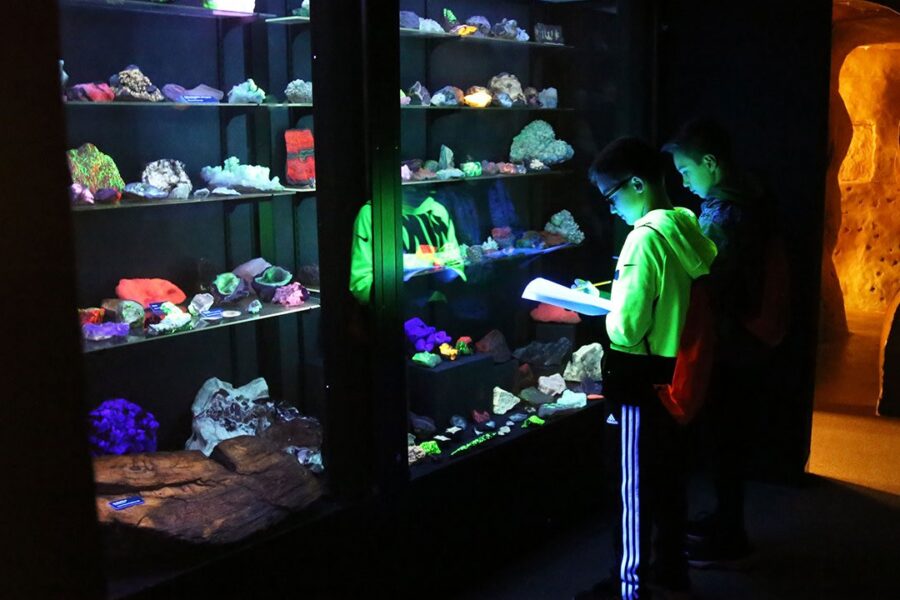
Students involved in the summer school program will have already been exposed to the following: geological timeline, formation of fossils, the video Walking with Dinosaurs, use of tools to be used on the field trip and safety involved with them, an overview of the activity of finding and removing the "fossilized" specimen. At the conclusion of the course, students will be taking a field trip to the Science Museum of Minnesota to see actual specimens and exhibits being prepared for and on display.
Background Information:
Removing fossilized specimens from the field is time-consuming and requires a considerable amount of patience. Great care is taken once a possible skeleton or portion is located to remove it with minimal damage. The "fossilized" specimen(s) which your students will be excavating will depend on what bones you have collected or selected prior to this activity. You may choose to plant an entire specimen, portions of an actual specimen, or an individual bone at your field trip site. This simulates closely the types of finds on a paleontology field experience. Weathered bones from a rabbit, deer, or other common animal in your area are preferable as there is no preparation involved.
Materials:
animal bones, whisk brooms, awls, old dental tools trowels, shovels, 5 gallon buckets or pails, water, plaster, burlap, paper and pencils for drawing maps/diagrams of finds, metric rulers or tape measures, cameras and video taping equipment (optional)
Student Activity:
Students are introduced to the procedure they will be following to get their finds from the field to the classroom. Once at the site, teams of students (4-5 per group) will start prospecting for the "fossilized" bones. Ideally, there will be one adult supervisor for each group. When a bone has been located, students need to gather their group near the site of the find. Remind them that more bones from the same animal may be buried beneath the surface. Care should be taken moving around the site so as not to disturb or damage other bones or bone fragments.
Using hand trowels, students can start slowly removing the overburden in the area to determine the extent of the area that contains bones. When the students reach the harder material in your matrix, they should use whisk brooms to clear the remaining loose material.
The next step involves exposing, but not removing, the bones contained in the matrix. Awls and whisk brooms will be necessary for this step. As the matrix reveals more of its hidden "treasure" one or more students should draw a detailed sketch/map of the location of each bone contained in the matrix. Work should continue on revealing the bones and determining the boundaries of the find.
Once this has all been completed, the students should dig a trench approximately 16 inches wide and a foot deep around the matrix. This allows the matrix containing the bones to be isolated from the surrounding material. Students should then undercut material from around and beneath the sides of the matrix. This is referred to as pedestaling. What remains should resemble a squat, flat-topped mushroom.
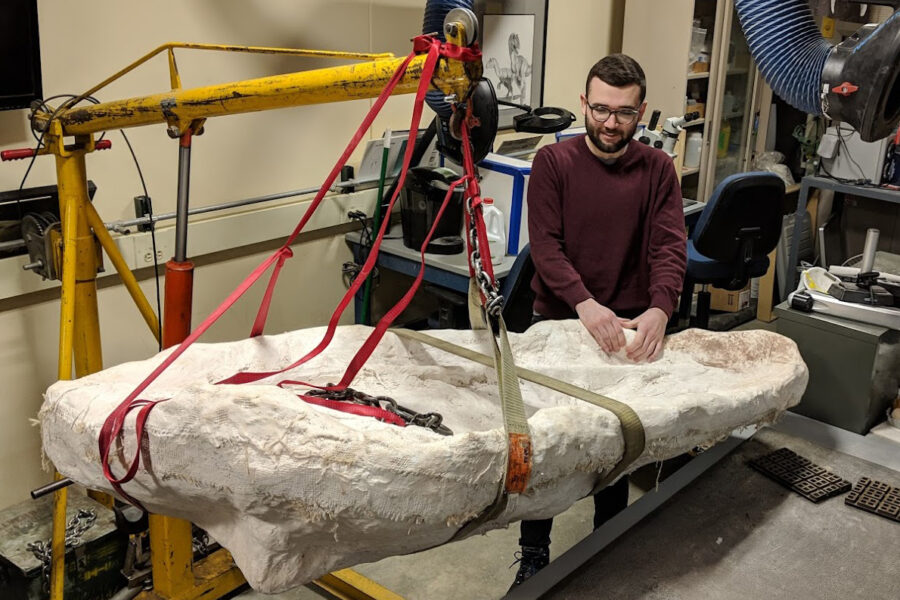
Have the students, under the supervision of an adult prepare the plaster. Soak the strips of burlap in the plaster mix and spread them out on the top of the matrix. The plaster-covered strips should be added until the entire top and sides of the matrix are covered. The idea is to build a jacket for the matrix that will provide protection and allow the specimen to be safely transported. Students should wash off the plaster from their skin at the site. Allow the jacket to harden.
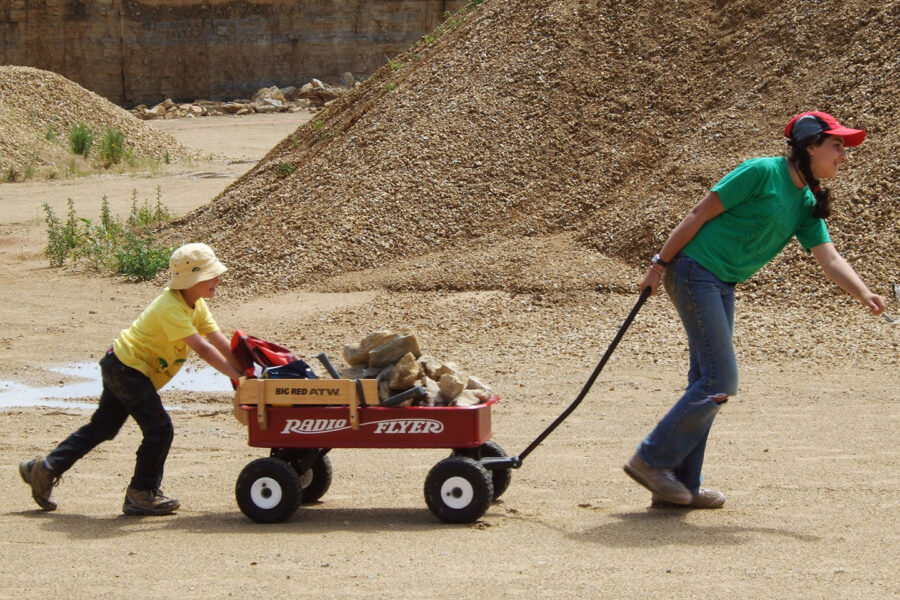
Lunch and a recreational activity should provide the necessary time needed for the plaster to set. Once the plaster has set, the matrix encased in its plaster jacket should carefully be flipped over so that it can be lifted and transported. Once all the teams have removed their finds the process of making a display of each begins. Using the sketch/site map, students will be able to expose the entire specimen in the classroom. The use of awls and old dental tools will be helpful. The final product will be the bone(s) displayed in the matrix. The surface displayed will actually be the underside of each bone found and exposed at the field site.
Teacher Notes:
This is a detailed lesson and requires a good deal of preparation on the part of the teacher. Collection and preparation of bones, locating a good site (a local quarry would be ideal), preparing a matrix with bones, enlisting capable and reliable parents/supervisors, and all the other normal effort and planning that goes into a successful field trip are necessary for this activity. However, the opportunity for students to do some "real science" and gain insights into what is required of paleontologists in order to further study prehistoric life are well worth the effort and the planning!
If you put the word out to students early in the year that you are looking for animal bones, they'll start arriving in your classroom shortly. Stress the fact that these should be old or you may end up with bones complete with odoriferous material attached. In this case some preparation will be necessary.
Your choice of site will dictate how you plant your specimens. You will need to spend time burying the major portion of each specimen, but avoid burying the entire matrix. The exposed bones should take some work finding, but should not be impossible. Prior knowledge of your age group and specific students will dictate the level of difficulty for this activity. Remind students that prospecting takes time. The bones are there to be found. In an actual paleontology field experience there are no assurances.
Vocabulary:
- awl- a pointed tool used for etching or scratching matrix- the natural material (as soil or rock) in which something is embedded.(as a fossil or crystal). The material in which something is embedded or enclosed (as for protection or study) overburden- material overlying a fossil pedestal- the base of an upright structure
- whisk broom- a small broom with a short handle
Interdisciplinary Connections:
- Language arts- Write a journal entry describing the processes involved in the activity. Write about the possible explanations of how the animal died, and explain why certain bones were found in the matrix. Art- Sketch a map/ diagram of the matrix and the bones it contains.
- Technology- Create a slide or Power Point presentation of the activity. Create a short video of the field experience.
Wisconsin State Science Standards:
A.8.4
http://www.dpi.state.wi.us/dpi/standards/scia8.html
Collect evidence to show that models developed as explanations for events were (and are) based on the evidence available to scientists at the time
A.8.6
http://www.dpi.state.wi.us/dpi/standards/scia8.html
Use models and explanations to predict actions and events in the natural world
B.8.3
http://www.dpi.state.wi.us/dpi/standards/scib8.html
Explain how the general rules of science apply to the development and use of evidence in science investigations, model-making, and applications
B.8.4
http://www.dpi.state.wi.us/dpi/standards/scib8.html
Describe types of reasoning and evidence used outside of science to draw conclusions about the natural world
C.8.1
http://www.dpi.state.wi.us/dpi/standards/scic8.html
Identify questions they can investigate using resources and equipment they have available
C.8.2
http://www.dpi.state.wi.us/dpi/standards/scic8.html
Identify data and locate sources of information including their own records to answer the questions being investigated
C.8.3
http://www.dpi.state.wi.us/dpi/standards/scic8.html
Design and safely conduct investigations that provide reliable quantitative or qualitative data, as appropriate, to answer their questions
C.8.4
http://www.dpi.state.wi.us/dpi/standards/scic8.html
Use inferences to help decide possible results of their investigations, use observations to check their inferences
C.8.5
http://www.dpi.state.wi.us/dpi/standards/scic8.html
Use accepted scientific knowledge, models, and theories to explain their results and to raise further questions about their investigations
C.8.6
http://www.dpi.state.wi.us/dpi/standards/scic8.html
State what they have learned from investigations, relating their inferences to scientific knowledge and to data they have collected
C.8.7
http://www.dpi.state.wi.us/dpi/standards/scic8.html
Explain their data and conclusions in ways that allow an audience to understand questions they selected for investigation and the answers they have developed
C.8.8
http://www.dpi.state.wi.us/dpi/standards/scic8.html
Use computer software and other technologies to organize, process, and present their data
C.8.9
http://www.dpi.state.wi.us/dpi/standards/scic8.html
Evaluate, explain, and defend the validity of questions, hypothesis, and conclusions to their investigations
C.8.10
http://www.dpi.state.wi.us/dpi/standards/scic8.html
Discuss the importance of their results and implications of their work with peers, teachers and other adults
C.8.11
http://www.dpi.state.wi.us/dpi/standards/scic8.html
Raise further questions which still need to be answered
E.8.5
http://www.dpi.state.wi.us/dpi/standards/scie8.html
Analyze the geologic and life history of the earth, including change over time, using various forms of scientific evidence
G.8.1
http://www.dpi.state.wi.us/dpi/standards/scig8.html
Identify and investigate the skills people need for a career in science or technology and identify the academic courses that a person pursuing such a career would need