Insects Preserved In Amber
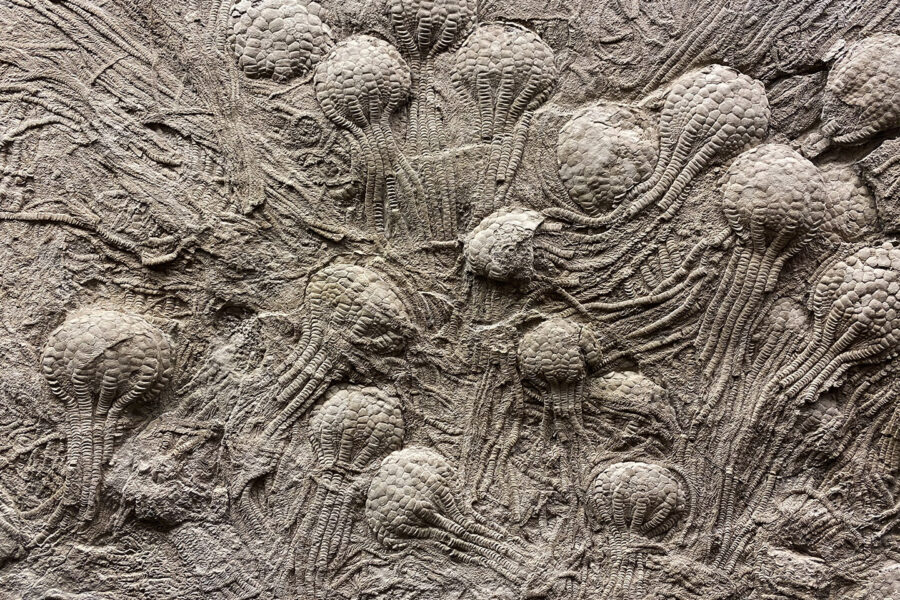
photo from Widener University
Author:
Karen Schroeder, Turner School District, 1231 Inman Pkwy. Beloit, WI 53511, klschroe@fjturner.k12.wi.us
Grades:
Pre-K- 3
Overview of Lesson:
The purpose of the lesson is for the students to learn about fossils in amber and then preserve an insect in "amber."
Suggested Time:
This activity takes a few minutes (about 15 seconds per student after the initial step) every hour or two until the bug is completely covered. After it is covered, it needs to dry overnight.
Students' Prior Knowledge:
Fossils are evidence of organisms that lived in the past. Sometimes these organisms were trapped in the sap or resin that seeped out of trees. These organisms could be as big as lizards or as small as very tiny gnats. Fossils in amber are one of the few ways that organisms are preserved without a change in form. If possible, show a piece of actual amber to students. If there are particles in it, place the piece under a microscope for students to study. Good pictures of amber are found in this website. (www.nearctica.com/paleo/paleo.htm)
The following is a poem from the Amber Home website:
'Amber, the freezing gold, that is not hot and is not cold
Has caught within its dreaming arms, the insects and the flowers charms
Time has kept as still as death, holding instant, every breath
Now from out our fading past, a scene which can forever last'
-Garry Platt-
Materials:
- small dead bug
- clear glue (not the clear blue glue)
- food coloring mixed to an amber color or a combination of tangerine and yellow liquid watercolor
- foil-approximately a 3"x 3" piece per student
Tangerine and Yellow Liquid watercolor may be purchased from Discount School Supply (800-879-3753) . It will wash out of most fabrics.
Directions:
This activity takes a few minutes (about 15 seconds per student after the initial step) every hour or two until the bug is completely covered. After it is covered it needs to dry overnight.
1. Mix clear glue with coloring until it nears the color of amber.
2. Bead a few drops of glue on the foil. Place the bug in the drops of glue. Drip glue only enough to cover the bug. Allow the glue to set. Repeat this process until the bug is completely covered.
3.Let the glue harden and dry completely. This is usually accomplished overnight if the insect is not too big or there is too much glue used.
If you have a piece of amber to show it to your students again, they will notice that there are air bubbles trapped within it as well as in their own piece of "amber." If you do not have amber, access amber pictures online at the website and its links listed previously.
Have the students look at their amber and the real piece of amber under a viewer/magnifying glass/microscope for a better view.
Vocabulary: fossil, amber, preserve, insect, bug, beetle
Extension Activities:
*Make a Class Book. Give each student a piece of paper with the following written on it: {Sticky Resin, Sticky Resin, what did you trap? I caught __ (type of insect or bug)________ in my tree sap.}
*Have students draw an insect or bug on a tree trunk. In the blank space they are to write the type of insect or bug. After they draw the bug, have them paint on a layer or two of the colored glue used in the Amber Lesson. Allow all sheets to dry completely before binding all into a class book.
*For greater creativity have the student create his or her own make-believe insect and name it.
Sticky Resin, Sticky Resin, what did you trap?
" I caught______________ in my tree sap."
Sticky Resin, Sticky Resin, what happens now?
"Time changes things and so have I. Amber is the gem that I've become. Look deep inside and see my treasure. I hold a piece of history for all to behold. "
For a PDF file that has these pages already set up, click here.
Wisconsin State Science Standards :
A.4.5
http://www.dpi.state.wi.us/standards/scia4.html
When studying a science-related problem, decide what changes* over time are occurring or have occurred
B.4.1
http://www.dpi.state.wi.us/dpi/standards/scib4.html
Use encyclopedias, source books, texts, computers, teachers, parents, other adults, journals, popular press, and various other sources, to help answer science-related questions and plan investigations
C.4.1
http://www.dpi.state.wi.us/standards/scic4.html
Use the vocabulary of the unifying themes* to ask questions about objects, organisms, and events being studied
C.4.3
http://www.dpi.state.wi.us/standards/scic4.html
Select multiple sources of information to help answer questions selected for classroom investigations*